Liu Wei’s monumental installations on The Met’s Facade
Liu Wei Transforms The Met’s Fifth Avenue Facade
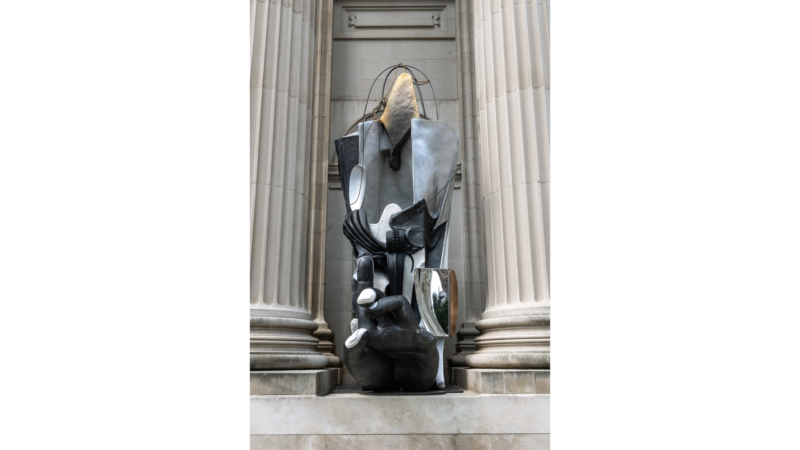
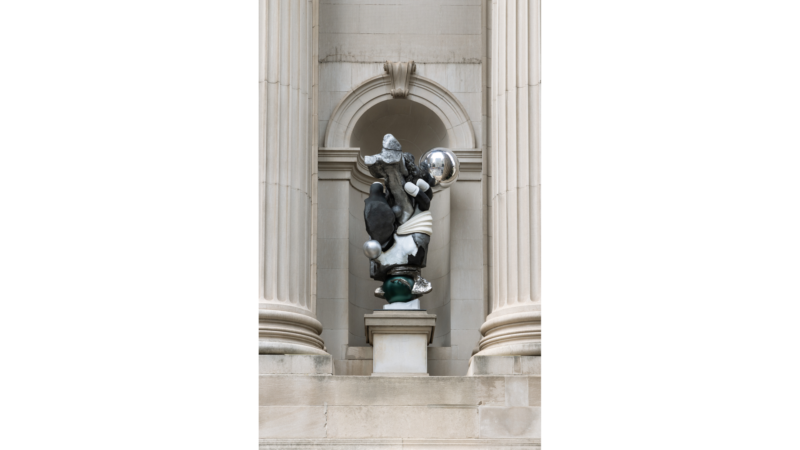
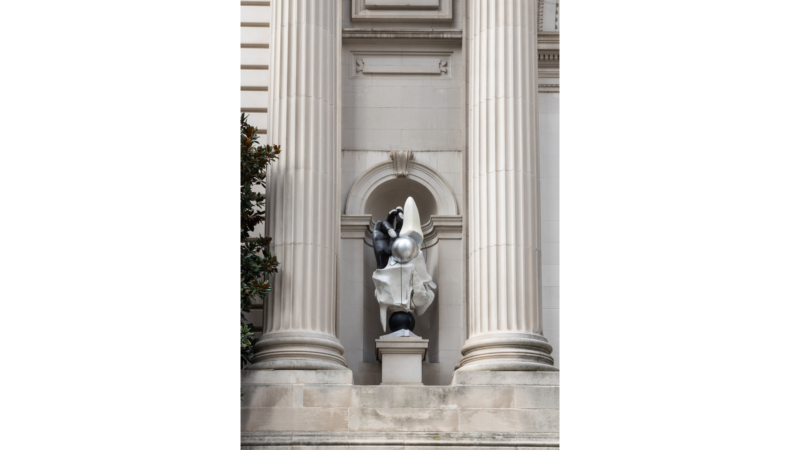
For the 2026 Genesis Facade Commission, the Metropolitan Museum of Art in New York has invited Chinese artist Liu Wei to transform its iconic Fifth Avenue facade with Speculation, a monumental new installation on view through June 8, 2027. The project marks the artist’s first major museum presentation in the United States and brings four large-scale sculptures into direct dialogue with The Met’s architecture. Titled Speculation, the works combine architectural fragments and bodily forms in materials including fiberglass composite, steel, aluminum, polyurethane paint, and bovine rawhide. A recurring image of the human hand connects the four sculptures, creating a powerful visual link between the physical and the speculative. Rather than simply decorating the museum’s facade, Liu Wei’s sculptures appear to interrupt, fracture, and reassemble it, reflecting on the cycles of rupture and repair that shape contemporary life.
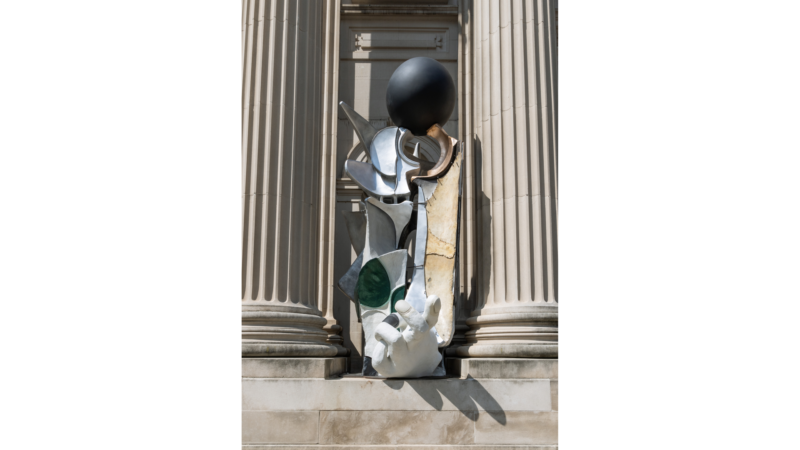
Mending, Transformation and the Contemporary World
The idea of mending lies at the heart of Liu Wei’s Speculation. In an interview shared by The Met, the artist explained: “The image is not important, what’s important is how we reflect everything we feel at present. My earliest idea was about mending. Because facing the state of today’s world, whether it’s our system or all our morality, governance, all of that. Anyway all issues are entangled within it.” This statement offers an important key to understanding the commission. Born in 1972 and based in Beijing, Liu Wei has been developing a distinctive artistic language since the late 1990s, working across photography, painting, video, sculpture, and installation. He belongs to a generation of Chinese artists who sought to define conceptual art on their own terms while responding to the profound social, political, economic, and urban transformations taking place in China. His practice frequently brings together fragments of architecture, historical references, bodily forms, and everyday materials, creating unexpected combinations that challenge conventional distinctions between abstraction and figuration, the readymade and the sculptural object.
From Bentu at Fondation Louis Vuitton to The Met
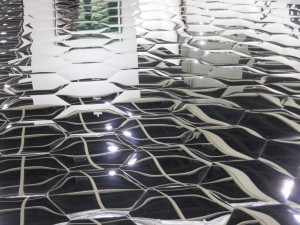
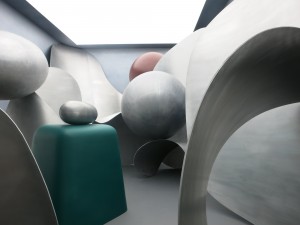
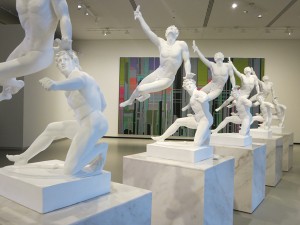
Liu Wei’s engagement with architecture and scale also connects Speculation at The Met with his earlier In Situ project at the Fondation Louis Vuitton in Paris 10 years ago, presented as part of the exhibition Bentu: Chinese Artists at a Time of Turbulence and Transformation, on which I had the opportunity to work.
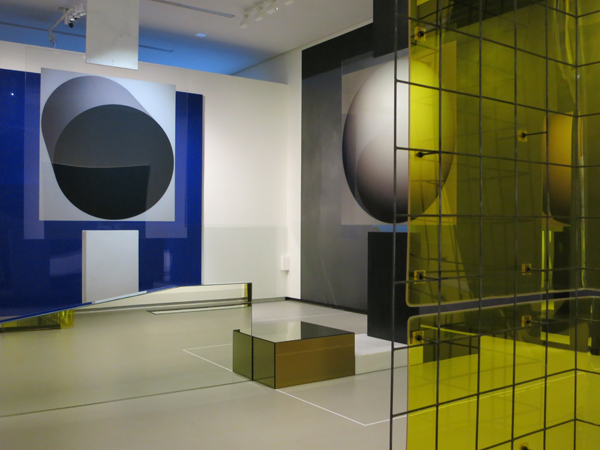
There, as at The Met, Liu Wei approached architecture not simply as a backdrop but as an active component of the artwork. His interventions invite us to reconsider how bodies, buildings, cities, and memories occupy space and how they can be fragmented and reconstructed. At The Met, Speculation confronts one of New York’s most recognizable cultural landmarks with a vision of a world in constant transformation. Through these four monumental sculptures, Liu Wei turns the museum facade into a place where rupture and mending, destruction and reconstruction, reality and imagination coexist.
About Liu Wei
Liu Wei (b. 1972, Beijing) is a Chinese contemporary artist who lives and works in Beijing. Working across photography, painting, sculpture, and installation, he explores the contradictions of contemporary society and the transformation of urban environments. Found objects and everyday materials are central to his practice, often reassembled into complex sculptural forms. Architecture and geometric structures frequently serve as references to the rapidly changing cities that surround him. Liu Wei studied at the China Academy of Art and has exhibited internationally in major museums and institutions across Asia, Europe, and the United States.
Tags: 2026, Chinese artist, Commission, contemporary art, exhibition, Liu Wei, New York, The MET
Continue reading
Related Articles